
Selected engagements where mission-driven visions and technology-enabled concepts were framed, assessed, and turned into value-based opportunities.
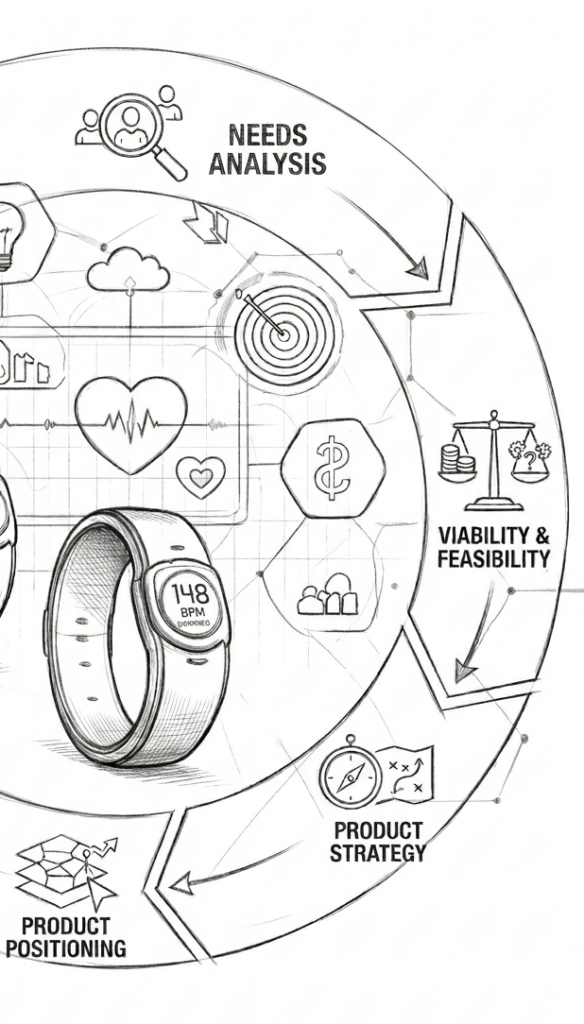
Value proposition for wearable health-tech
Situation and Need
A newly funded startup with strong scientific expertise in biological fluid sensing wanted to develop a wearable device for non-invasive vital parameters monitoring. The compelling vision needed to be translated into an executable value proposition.
Approach
- Identified Ideal Customer Profile and selected Offerings through a value proposition workshop
- Prioritized value proposition options on customer value, feasibility and viability and validated selected ones through market research
- Conducted competitive analysis in fitness and medical domains to define ideal product positioning
- Designed a validation-first MVP strategy with measurable success criteria, parallel product/R&D tracks, and milestone-based decision gates
- Integrated IP analysis and feasibility checkpoints to reduce technical and funding risk
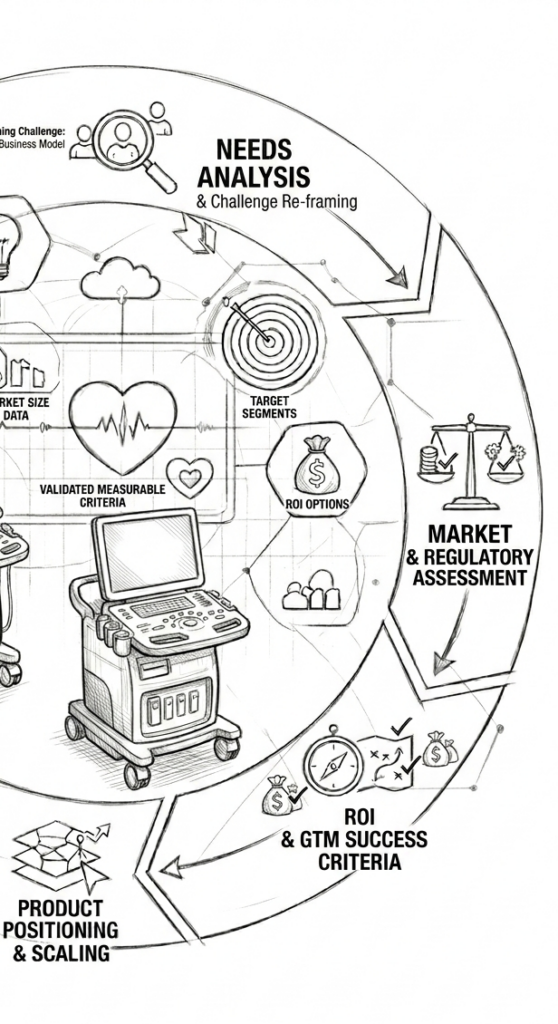
Reframing a strategic OEM collaboration in medical imaging
Situation and Need
A product development company with proprietary ultrasound imaging capabilities faced the question on whether partnering with an established medical device OEM would be strategic for product scaling and access to new markets. While engineering capabilities were clear, the business model was not.
Approach
- Reframed internal challenge as a product positioning objective
- Defined target segments and business model
- Assessed market size and regulatory burden in different geographical regions
- Quantified ROI from R&D in terms of options rather than highly discounted future cash flows
- Defined and jointly validated measurable key success criteria for go-to-market
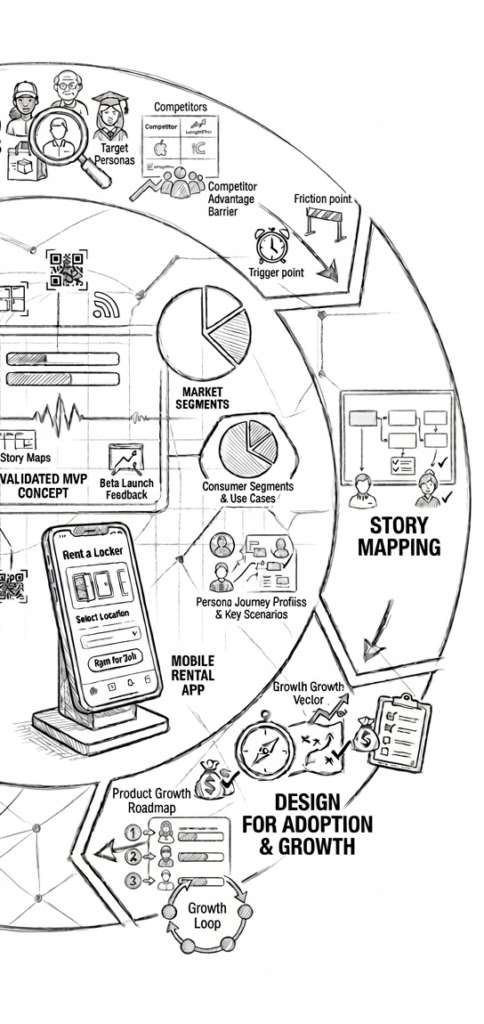
Product repositioning from B2B to B2C
Situation and Need
A logistics technology company with proprietary IoT-based modular lockers for B2B Click-and-Collect operations explored repositioning its software and technology to enable self-service rental units for end consumers (B2C). While the technological foundation and the product vision were solid, the new market required validation and a simplified product concept suitable for a minimum viable product (MVP).
Approach
- Assessed customer value, competitive alternatives, and target margins to determine willingness to pay and viable pricing models
- Developed end-to-end story maps to prioritize essential MVP features
- Designed in-app mechanisms supporting user adoption and organic growth
- Supported agile MVP development and beta launch
- Structured collection and prioritization of early market feedback
GET IN TOUCH